
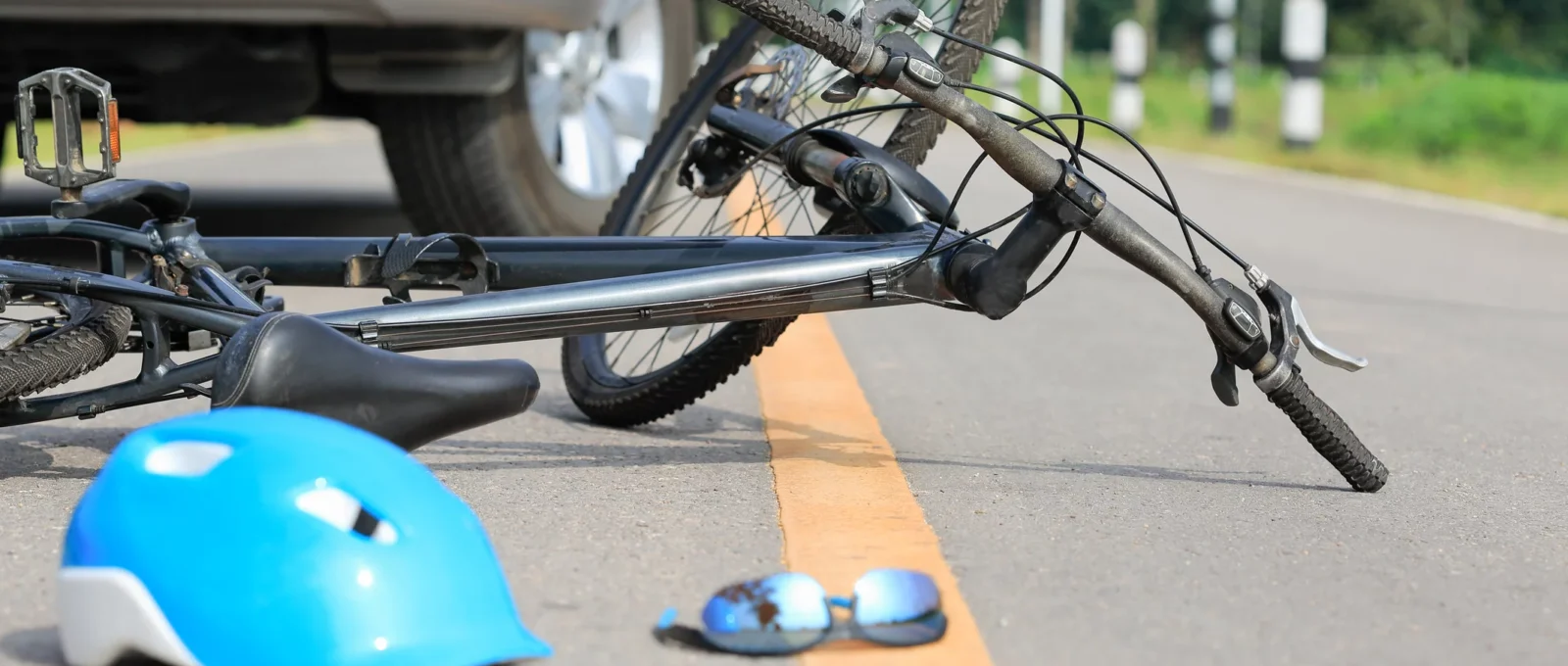

Cycling has become a serious mode of transportation in Hudson County. Between the waterfront greenways, the protected lanes along Hudson Street, and the steady stream of riders commuting into the PATH stations, Jersey City and Hoboken have more bicycle traffic than most people outside the area realize. With that volume comes a predictable consequence: collisions, and the complicated legal questions that follow them.
If you’ve been hit by a car while riding in this area, the path to compensation is not as straightforward as it would be for a driver. New Jersey’s insurance laws, the physical realities of how cyclists get hurt, and the way fault gets assigned in these cases all work differently. Getting the details right from the start matters more than most people expect.
When Fraud Allegations Disrupt Your Life
Being accused of fraud can feel like everything is suddenly at risk your reputation, your career, and your peace of mind. These cases often involve detailed financial records and complex accusations that can be difficult to fully understand without proper guidance. It’s important not to panic or make rushed decisions. Instead, taking a calm and informed approach from the very beginning can help you stay in control of the situation.
The Importance of a Focused Legal Strategy
Fraud cases require careful analysis and a defense built on facts, not assumptions. Working with a skilled Springfield fraud defense lawyer gives you the advantage of having someone who understands how these cases are investigated and prosecuted. From reviewing evidence to identifying gaps in the case against you, the right legal support can play a critical role in protecting your rights and shaping a strong defense strategy.
Moving Forward with Confidence
While fraud allegations are serious, they do not define your future. The actions you take now can significantly influence the outcome of your case. By seeking timely legal advice and staying informed throughout the process, you give yourself the best chance to protect both your personal and professional life. A well-prepared defense not only addresses the present challenges but also helps you rebuild and move forward with confidence.
How New Jersey’s No-Fault System Applies to Cyclists
New Jersey is a no-fault state for automobile insurance, which means drivers typically turn to their own Personal Injury Protection (PIP) coverage first after a crash, regardless of who caused it. Bicyclists occupy an unusual space in this framework.
If a cyclist has a New Jersey automobile insurance policy of their own, that PIP coverage often extends to them even when they’re riding a bike and not driving. The same applies in some cases to cyclists who are covered under a household member’s auto policy. If no such policy exists, there’s another potential source: the insurance carried by the vehicle that struck you.
This matters practically because PIP can cover medical expenses quickly, before any liability question is resolved. In cases involving serious injuries, that initial coverage can be the difference between getting timely treatment and waiting months for a disputed claim to settle.
That said, PIP alone rarely comes close to covering the full cost of a serious bicycle accident. Orthopedic injuries, particularly fractures to the collarbone, wrist, and pelvis, are common in cycling crashes. Traumatic brain injuries occur even in helmet wearers, especially in high-speed or multi-impact collisions. Soft tissue damage to the spine from being thrown over a hood or onto pavement can require surgery. These are not minor-accident costs, and stepping outside the no-fault system to pursue the at-fault driver directly is often necessary and appropriate.
Comparative Fault and the Questions It Raises for Cyclists
New Jersey uses a modified comparative fault standard. You can recover damages as long as you are not found more than 50 percent responsible for your own injuries. But your recovery gets reduced by your share of fault, which means how you were riding matters as much as what the driver did.
A few scenarios come up repeatedly in Hudson County cycling claims. Running a red light at a busy intersection on Jersey Avenue is the obvious one. Riding against traffic on a one-way street is another. Cutting across lanes without signaling, riding at night without lights, or taking a lane on a road where cyclists are expected to use a designated path can all invite a comparative fault argument from the defense.
This does not mean a cyclist who ran a red light has no claim. If a driver was speeding, distracted, or made an illegal turn, that driver may still be predominantly at fault. But the defense will use every available argument to shift the percentage, and a poorly documented or unrepresented claim makes it easier for them to succeed.
One of the most contested issues is lane placement. Hoboken and Jersey City have added protected infrastructure in recent years, but plenty of roads in both cities still lack adequate bike infrastructure. Cyclists riding on streets with no designated lane are legally permitted to use the road, but insurance adjusters and defense attorneys sometimes argue that a rider choosing to ride in a particular location was inherently negligent. That argument does not automatically hold up, but countering it requires knowing the law and building the right record.
What Damages Look Like in a Serious Cycling Claim
The damages in a bicycle accident case can be substantial, and they are often underestimated early on. Emergency care and initial hospitalization are only part of the picture. Physical therapy, follow-up surgery, lost wages during recovery, and long-term limitations on physical activity all factor into a complete claim. So does pain and suffering under New Jersey’s verbal threshold analysis for those who step outside the no-fault system.
Traumatic brain injury deserves particular attention. A cyclist wearing a helmet who suffers a concussion, post-concussive syndrome, or a more serious brain injury faces a frustrating pattern: their injuries may not be obvious on initial imaging, and insurance adjusters may undervalue the claim as a result. Cognitive impairment, chronic headaches, mood changes, and disrupted sleep are real and disabling consequences of TBI that require medical documentation and expert support to present effectively.
Helmet use also affects how cases get framed. In New Jersey, adults are not legally required to wear helmets, but defense attorneys sometimes use the absence of a helmet as part of a comparative fault argument. A well-prepared legal team will know how to address that line of argument.
What to Do Immediately After a Crash in Jersey City or Hoboken
The actions taken in the first hours after a crash have a real effect on what a claim looks like later.
Calling the police to the scene creates an official record of the crash. Documenting the location, the vehicle’s position, traffic signals, road markings, and any visible damage to your bike with photographs gives you evidence that can disappear quickly. Collecting contact information from witnesses is especially valuable in urban areas where bystanders often see exactly what happened.
Getting medical attention promptly, even when injuries feel manageable in the moment, protects both your health and your claim. Delayed treatment is one of the first things insurers use to argue that injuries were not serious.
Speaking with an attorney before giving a recorded statement to any insurance company is worth doing. Statements made in the hours or days after a crash, when details are still unclear and the full scope of injuries is not yet known, can be used to limit what you recover.
Working with The Law Offices of Anthony Carbone on Your Cycling Claim
The Law Offices of Anthony Carbone has handled personal injury claims throughout Hudson County for years, including cases involving bicycle accidents along the waterfront corridor, in downtown Jersey City, and throughout Hoboken’s grid. The firm understands the specific roads where these crashes happen and the legal arguments that typically arise on both sides.
Bicycle accident claims in New Jersey are more nuanced than standard car accident cases. The PIP coverage questions, the comparative fault analysis, the unique injury patterns, and the documentation challenges all require an attorney who knows what to look for from the beginning of the case, not just at the settlement stage.
If you or a family member has been injured in a bicycle crash in Jersey City, Hoboken, or anywhere in Hudson County, contact The Law Offices of Anthony Carbone directly to discuss the details of your situation. The consultation costs nothing, and the information you get can make a significant difference in how your claim unfolds.



Leave a Comment